Common Audi 3.0T Issues: Oil Leaks and Coolant Leaks
If someone asked what the most common issues are with the 3.0T Audi turbocharged engine, oil leaks and coolant leaks would easily top the list.
Recently, a new customer brought in an Audi SQ5 they had purchased not long ago from a local Lincoln dealership. Their complaint? A strong burning oil smell while driving.
According to the dealership, they had “found no leaks” and simply “cleaned the engine.”
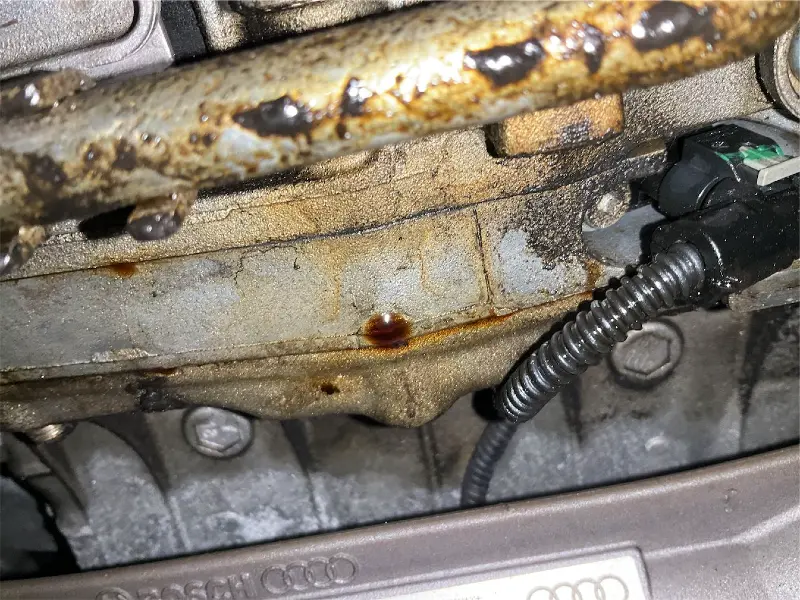
When the SQ5 arrived at Reflex, I walked out to the parking lot with the customer for a quick look under the hood. It doesn’t take a rocket scientist — within seconds, I could see exactly where the leak was coming from. And, for the record, the engine hadn’t been cleaned at all. There was at least a year’s worth of oily residue built up from a slow leak that had been left untreated.

The culprit: a leaking oil filter housing (part number 06M 115 401 L).
This plastic housing holds the oil filter, and like most plastic components on European engines that carry oil or coolant, it eventually will leak. Years of heat cycles and cold temperatures will cause these items to leak sooner or later.
When the oil filter housing starts to leak, oil leaks down both the front and rear of the engine. The “valley” area beneath the turbocharger can fill with oil and slowly seep out, creating that all-too-familiar burning smell.
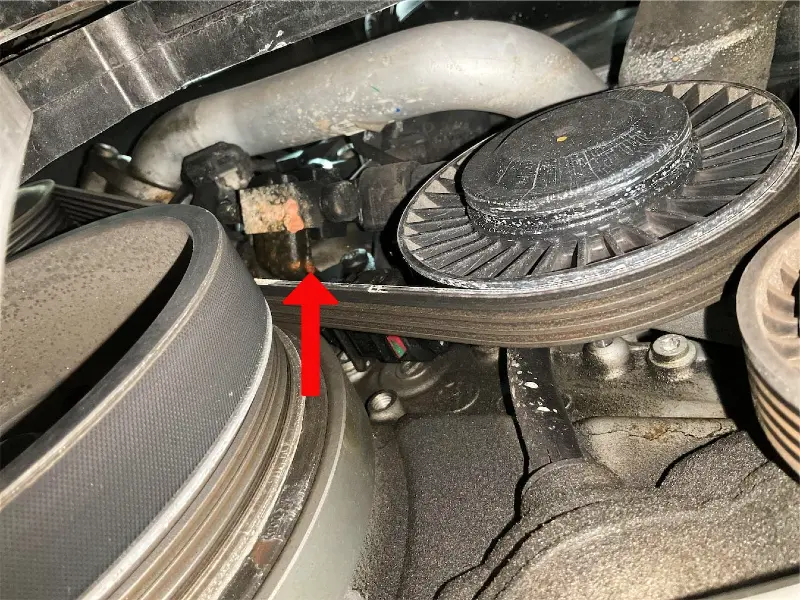
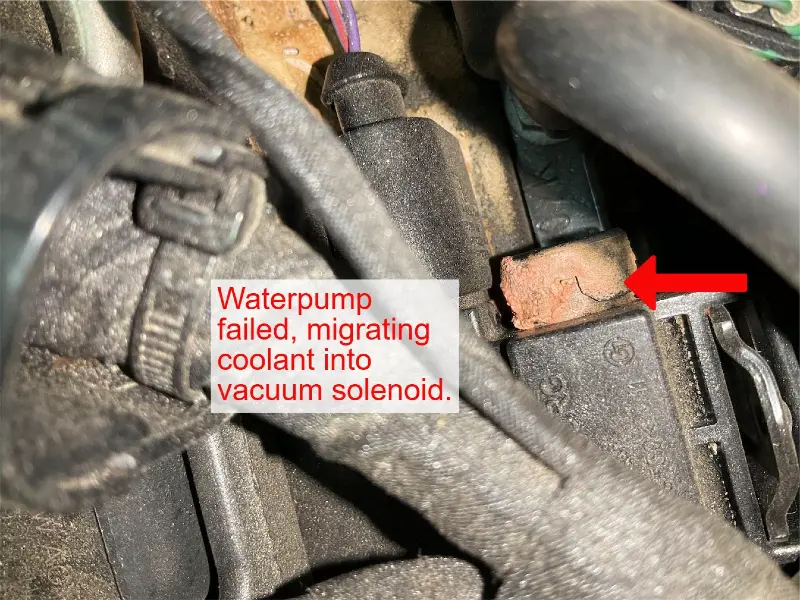
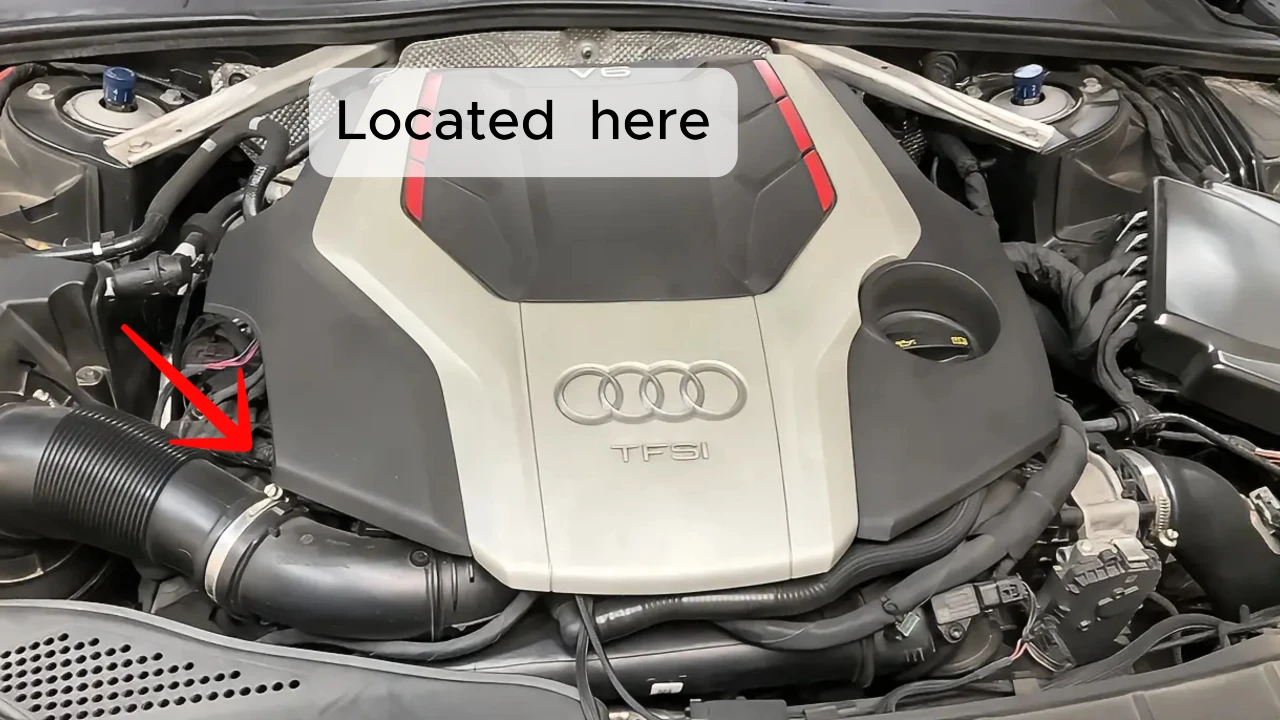
Coolant leaks are just as common on these engines — typically from a failing water pump. These pumps can fail in two ways, but the most common issue we see is internal failure that allows coolant to enter the vacuum solenoid that actuates the water pump.
If left unnoticed, coolant can travel through the solenoid and into the engine wiring harness, leading to major electrical issues. Whenever we perform an oil change on these engines, we always unplug the solenoid to check for signs of coolant migration.
In this particular case, coolant was migrating through the vacuum line, into the solenoid, and leaking externally from the water pump itself.
When performing these repairs, we always recommend replacing the accessory belt, belt tensioner, and idler roller, depending on the vehicle’s age and mileage. Our suggested interval for this belt service is around 90,000 miles, or anytime you’re already in the area for related repairs and the mileage is getting close. Doing it at the same time saves on labor and is always the most cost-effective approach in the long run.